
Cat Litter Box Packaging and Shipping: A Landed Cost Guide for Importers
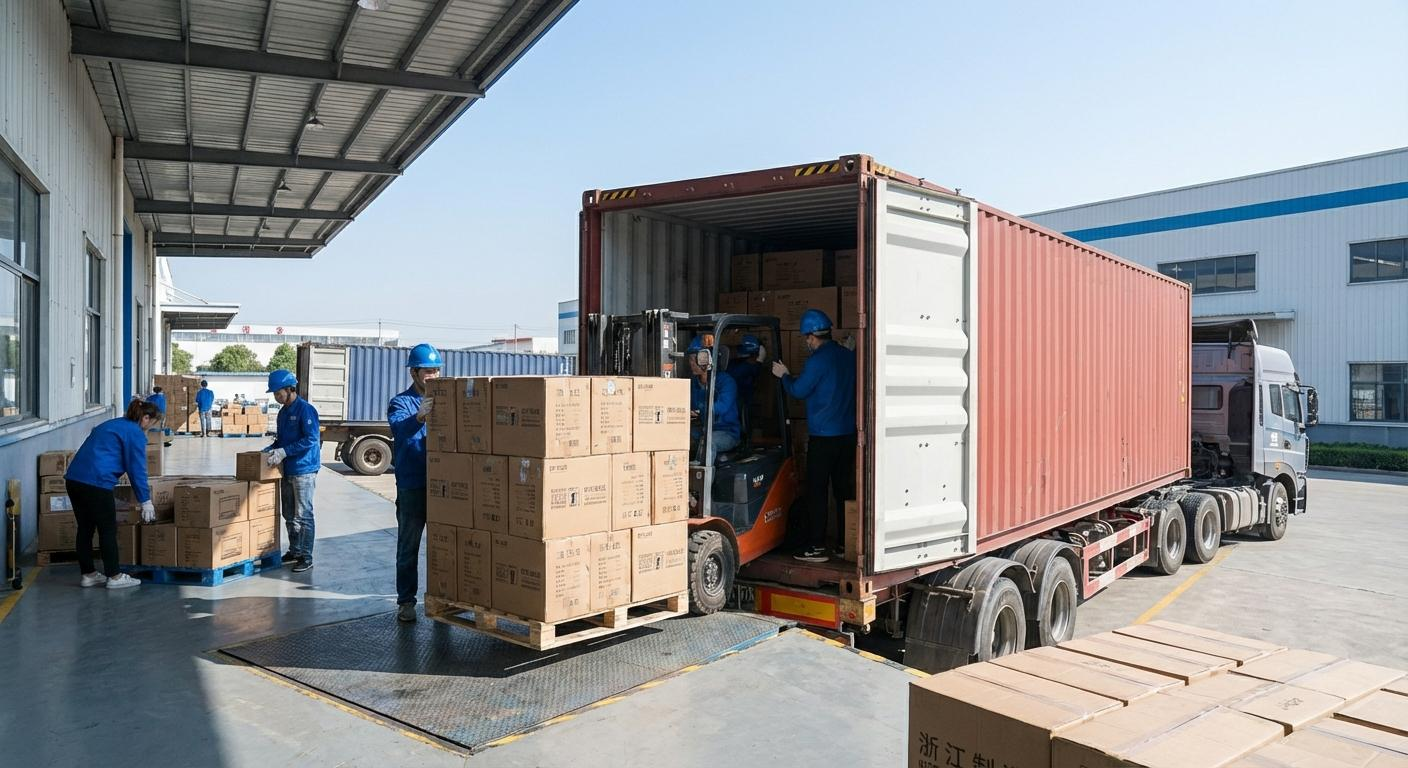
Cat litter box shipping and packaging can change the true profitability of a wholesale order as much as the quoted unit price. Large automatic litter boxes occupy substantial carton space, while stainless steel trays may require surface protection, nesting controls and different retail packaging. For importers, distributors, pet brands and e-commerce sellers, the right sourcing decision considers packaging design, cubic volume, freight responsibility, customs paperwork and post-arrival costs together.
This guide explains how B2B buyers can compare export packaging, calculate carton CBM, discuss EXW, FCA and FOB quotations, plan container loading and estimate cat litter box landed cost before releasing a purchase order.
1. Start With the Target Market and Sales Channel
Packaging should be designed for the way a product will travel and sell. An importer delivering pallets to a distributor warehouse may have different handling requirements from an Amazon seller shipping individual retail cartons to fulfillment centers.
- Importers and distributors: pallet configuration, carton markings, container efficiency, documentation and reorder consistency.
- Retail chains: retail-box durability, barcode accuracy, product identification and shelf-ready presentation.
- Private-label pet brands: branded artwork, multilingual instructions, protective inserts, accessory lists and consistent unboxing.
- E-commerce sellers: parcel handling, packaging strength, dimensional-weight exposure and the destination fulfillment program’s current requirements.
Before approving a package, tell the supplier the destination country, distribution channel, shipping mode and whether the shipment will be handled as loose cartons, pallets or full containers.
2. Automatic vs Stainless Steel Cat Litter Box Packaging
Different product structures create different transport risks. A one-size-fits-all packaging specification is rarely sufficient for a mixed cat litter box assortment.
| Product Type | Main Packaging Risks | Buyer Validation Points |
|---|---|---|
| Automatic self-cleaning litter box | Impacts, vibration, cosmetic damage, movement of internal parts | Protect electronics, secure moving components, verify accessories and test the packed sample |
| High-sided stainless steel litter box | Scratches, dents, edge damage and loose shields | Check surface separators, edge protection, fit of removable parts and carton rigidity |
| Extra-large litter box | High freight volume, carton deformation and handling difficulty | Confirm external dimensions, gross weight, stacking limits and pallet footprint |
| Private-label bundle | Missing scoops, mats, manuals or incorrect printed materials | Use an approved packing list, bundle reference sample and version-controlled artwork |
Ask for photographs of the complete packed configuration, not only a product image without its protective inserts.
3. What Should Be Included in an Export Packaging Specification?
A proper specification links the product SKU to its final shipping package. Request these details before negotiating freight:
- Exact product model and approved revision.
- Individual retail-box length, width and height.
- Master-carton dimensions and units per carton, where applicable.
- Net weight, gross weight and packed product photographs.
- Internal protection materials and accessory positions.
- Carton board specification and approved closure method.
- Labels, shipping marks, barcodes and destination-language information.
- Maximum stacking guidance based on actual packaging validation.
- Pallet dimensions and loading configuration when palletized.
Where transport testing is appropriate, agree on the test protocol and acceptance criteria for the exact packed product. A packaging mockup is not a substitute for a validated shipping configuration.
4. How to Calculate Cat Litter Box CBM
CBM means cubic meter. It is a useful measure for planning sea freight, warehouse capacity and container loading. For a rectangular carton measured in centimeters:
Carton CBM = Length (cm) x Width (cm) x Height (cm) / 1,000,000
Illustrative example: A carton measuring 60 x 50 x 40 cm occupies 0.12 CBM. Two hundred identical cartons have a combined nominal carton volume of 24.0 CBM.
This is not a promise that 200 cartons will fit a particular container or pallet layout. Real loading depends on carton orientation, packaging tolerances, pallets, weight limits, door dimensions, securing materials and usable space.
Ask the supplier or freight forwarder for a loading plan based on confirmed carton measurements and loading rules. For a mixed order, calculate each SKU separately and then assess the practical loading arrangement.
5. Container Loading: More Than Dividing Container Volume by CBM
A theoretical container capacity divided by carton CBM provides only a rough upper bound. A professional loading plan should consider:
- Container type and actual internal usable dimensions.
- Carton strength, permitted orientation and stacking height.
- Gross cargo weight and road/transport restrictions.
- Palletized versus floor-loaded cartons.
- Void space, securing requirements and load distribution.
- Mixed SKUs, fragile items and unloading sequence.
- Destination warehouse receiving requirements.
Request a written loading estimate showing units by SKU, total cartons, approximate CBM and gross weight. Confirm the final quantity before shipment, rather than advertising an unverified fixed “units per container” figure.
6. EXW, FCA and FOB: Which Trade Term Should Buyers Compare?
Supplier quotations must state the agreed Incoterm, named place or port, and edition. Different terms allocate costs, responsibilities and risk at different points in the journey. They should not be compared as interchangeable prices.
| Term | General Delivery Point | Typical Buyer Consideration |
|---|---|---|
| EXW — Ex Works | Goods made available at the named place; seller is not generally required to load the collecting vehicle or clear exports | Buyer may need greater control and local handling/export arrangements |
| FCA — Free Carrier | Goods delivered to the buyer’s nominated carrier at the agreed named place | Often worth considering when container cargo is handed to a carrier or terminal before vessel loading |
| FOB — Free On Board | Goods placed on board the nominated vessel at the named port | Sea/inland-waterway term; not generally the preferred description for earlier container-terminal handover |
The International Chamber of Commerce explains these rules under Incoterms 2020. For containerized cargo handed over before vessel loading, the ICC notes that FCA may be more appropriate than FOB. Agree on the term with your supplier and logistics advisor for the actual transaction.
Also request a clear list of what each quotation includes: export packing, local transport, export clearance, terminal charges, documents, main carriage, insurance and destination services.
7. Sea Freight, Air Freight and Parcel Delivery
Sea freight can be suitable for planned, higher-volume replenishment, while air freight or express parcel services may be used for urgent samples or smaller shipments. The fastest method is not automatically the best commercial choice.
Large automatic litter box cartons may face dimensional-weight pricing for parcel or air services. Some carriers calculate a chargeable weight based on the greater of actual and dimensional weight, using a service-specific divisor.
For the carton example above, the cubic measurement is 120,000 cm³. At an illustrative divisor of 5,000, the dimensional weight is 24 kg before any carrier-specific rounding or rules. Confirm the applicable divisor and surcharges with the freight provider rather than relying on a universal formula.
See the UPS guide to shipping dimensions and weight for an example of carrier rules.
For each shipping mode, compare total transit time, reliability, destination handling, customs procedures, insurance terms and final delivery requirements.
8. Calculate Total Landed Cost per Cat Litter Box
The landed cost of imported litter boxes is the cost of bringing sellable inventory to the specified destination under the defined commercial and accounting assumptions. Import duties, taxes and local charges vary by country, classification, origin and transaction.
A practical planning formula is:
Estimated landed cost per sellable unit = (Goods + Packaging + Origin Charges + Main Freight + Insurance + Import Duties + Nonrecoverable Taxes + Customs Clearance + Destination Delivery + Inspection + Expected Loss Allowance) / Expected Sellable Units
Avoid double-counting any amounts already included in the agreed Incoterm quotation. Recoverable VAT or similar taxes should be treated according to the buyer’s accounting and tax position rather than automatically counted as a permanent cost.
For an import quote, prepare a worksheet with each line item and a documented exchange rate. Ask a customs broker to verify the applicable HS classification, duty rate and customs value treatment for the destination country.
9. How OEM/ODM Packaging Affects MOQ and Freight
Custom branding can improve shelf presentation and market positioning, but it may add material cost, a separate minimum print run, artwork approvals, inserts and new packaging tests.
Discuss custom logo cartons, manual languages, barcode specifications, color references and accessory bundles before finalizing the product quotation.
Changing a carton by only a few centimeters can also affect shipping volume, pallet patterns or parcel chargeable weight. Ask for the final packed sample dimensions after all OEM elements have been added.
Buyers developing branded ranges can review YOUNIHAO OEM/ODM customization options and send an approved packaging brief together with the RFQ.
10. Packaging and Documentation for Europe, the UK, the US and Other Markets
The destination market affects product labeling, packaging information, importer obligations and supporting documents. Requirements can differ between electronic automatic litter boxes and non-electrical stainless steel trays.
Before shipment, confirm with the responsible parties whether the order requires:
- Commercial invoice and packing list.
- Transport document, such as a bill of lading or air waybill, as applicable.
- Product identification and traceability information.
- Relevant product safety or conformity documentation for the final SKU.
- Country-of-origin information and any required certificates.
- Destination-market instructions, warnings, labeling and packaging information.
- Packaging and producer-responsibility compliance where applicable.
Use current local regulations and customs advice. Do not assume that a generic certificate, an old document or a supplier’s export experience eliminates the importer’s responsibilities.
11. Reduce Shipping Damage Before Placing a Repeat Order
Quality control does not end when production is completed. Export packing should be included in pre-shipment inspection. Ask the inspection team to check representative packed cartons for:
- Correct SKU and model configuration.
- Matching accessories, adapter and user manual where applicable.
- Approved inserts and protective materials.
- Surface condition and moving-part restraints.
- Carton dimensions, closure and legible labels.
- Correct pallet or container loading configuration.
Record shipment damage and customer returns by model and failure type. Use that evidence to improve the package, update the supplier’s acceptance criteria and avoid repeating the same logistics issues.
12. B2B Shipping and Packaging RFQ Template
We are importing cat litter boxes to [destination country] for [retail/distribution/e-commerce] sales. Please quote [model/product type] at [quantity] units.
Provide the individual retail carton and master-carton dimensions, packed gross weight, units per carton, total CBM, estimated pallet or container loading quantity, packaging protection details, available OEM carton and multilingual manual options, production lead time and confirmed inspection arrangements.
Please provide comparable EXW and FCA or FOB quotations where suitable, naming the delivery place/port and Incoterms edition. Identify what is included in each price and supply the document list needed for international shipment. We would also like your recommendations for reducing damage and avoidable packaging volume.
Frequently Asked Questions About Cat Litter Box Shipping and Packaging
How do I calculate CBM for a cat litter box carton?
Multiply length, width and height in centimeters and divide by 1,000,000. A 60 x 50 x 40 cm carton is 0.12 CBM. Use the confirmed shipping-carton measurements, not the unboxed product dimensions.
How many automatic cat litter boxes fit in a 40-foot container?
There is no universal quantity. It depends on the packaged product dimensions, stacking restrictions, gross weight, pallet configuration and usable container space. Ask for a SKU-specific loading plan.
Is FOB or EXW better for cat litter box wholesale orders?
Neither is automatically better. They assign different responsibilities and costs. For containerized cargo delivered to a terminal before loading, FCA may be worth discussing. Compare complete offers with named delivery points.
Does a private-label carton change the MOQ?
It may. Printed cartons, custom inserts, colors and multiple market-language versions may each have their own order minimum. Confirm packaging MOQ separately from the product MOQ.
What is the difference between freight cost and landed cost?
Freight cost is one component of transport. Landed cost includes the relevant cost of goods, freight, import duties, clearance, local delivery and other nonrecoverable costs to reach the chosen destination.
What packaging information should an Amazon seller request?
Ask for packed dimensions, weight, barcode plan, protective packing, carton structure and current receiving requirements for the intended fulfillment channel and marketplace. Confirm the latest requirements directly with the fulfillment provider.
Should importers arrange pre-shipment inspection of packaging?
For a significant wholesale order, it is prudent to include packing, labels, accessories and carton condition in an agreed inspection plan. The scope should match the product, order risk and buyer’s distribution channel.
Build a More Predictable Global Cat Litter Box Supply Program
Global sourcing works best when product selection, packaging, transportation and buyer-side import costs are discussed before the purchase order is finalized. Well-defined carton dimensions, packaging approvals and trade terms make it easier to plan profitability and replenish inventory.
YOUNIHAO presents automatic and stainless steel cat litter box product lines for importers, distributors and private-label pet brands. Buyers can discuss model selection, OEM/ODM packaging and shipment preparation as part of a documented B2B sourcing project.
Contact YOUNIHAO for a wholesale quotation and packaging specification →
Please include your destination country, preferred models, estimated order quantity, sales channel and desired shipping term.

OEM · ODM · Private Label
Ready to Source Your
Next Cat Litter Box?
Low MOQ. CE, RoHS & EMC certified. Custom packaging and accessories available. Trusted by brands across Europe and North America.
Uncategorized
Cat Litter Box Certification Requirements for EU, UK and US Importers
Cat litter box cer...
Uncategorized
How to Audit a Cat Litter Box Factory: Quality Control Checklist for B2B Buyers
A cat litter box f...

Uncategorized
Stainless Steel Cat Litter Box Wholesale: SUS304 Buying Guide for B2B Buyers
Stainless steel ca...